
Many founders ask, “Is there a way to signal to Facebook bad customers to avoid with ads?” because they’re tired of dealing with refund-happy buyers, serial complainers, and customers who consistently suck up profits with low lifetime value. At Karma Media, we see this pattern over & over again – across brand after brand – all using the Facebook Ads ecosystem, where behaviour signals are way more important than demographics.
This article tries to break down the no-brainer commercial logic, the underlying data structure, and the optimisation approach that needs to happen if you want to steer Meta away from low-value users and towards customers who actually generate profit.
Contents
- 1 Why Negative Signalling Matters For Profit
- 2 How Meta Actually Learns Buyer Quality
- 3 The Logic of Excluding Bad Buyers
- 4 How To Flag Low-Value Users to Meta
- 5 A Helpful Comparison: Good vs Bad Signal Structures
- 6 How Creative and Content Affect Buyer Quality
- 7 Why This Matters For Scaling
- 8 A Simple Framework To Improve Audience Quality
- 9 Strategic Close
- 10 FAQ
Why Negative Signalling Matters For Profit
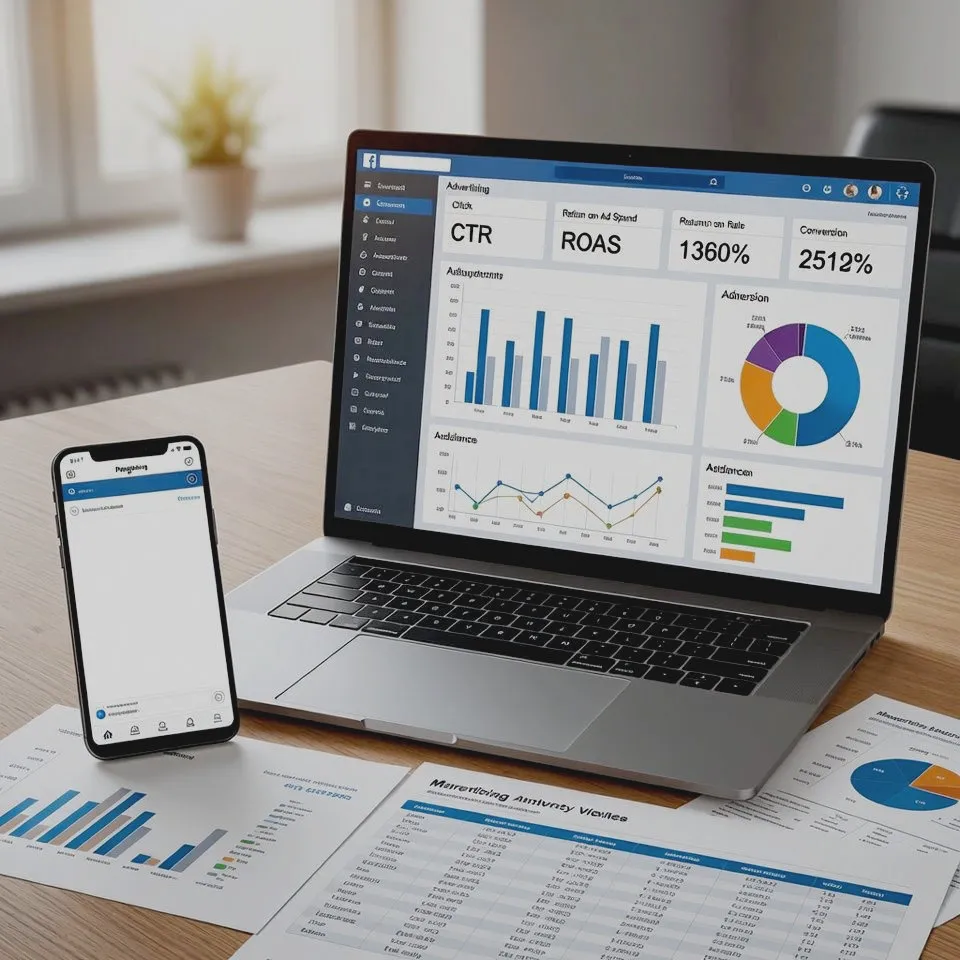
Meta optimises based on probability of behaviour – and if your target audience just keeps on producing refund requests, complaints, or low-value purchases, your ad account’s relevance score starts tanking – which means costs go up.
Three commercial truths stand out:
- Meta is all about optimising behaviours, not these fake personas everyone talks about
- Customer Acquisition Cost (CAC) is directly linked to how good your signal quality is
- Your funnel gets the kind of customers that your ads promise
How Meta Actually Learns Buyer Quality
Meta learns by pattern recognition – not by making common-sense decisions.
Brands are unknowingly teaching the system to favour those low-value behaviours when they:
- Optimise for cheap sales instead of the big-ticket items
- Use engagement posts to attract the wrong kind of audience
- Allow engagement baiting that gets the algorithm to punish you
- Just feed in pixel-only events and let the backend handle the data collection.
- Fail to pass on any refund or churn signals back to the platform
- Create overly broad creative that encourages low-intent clicks
A typical Facebook marketing company sees this all the time: on the surface, the ad account looks okay because, you know, sales are coming in – but the underlying quality of the customers is quietly tanking in the background.
Your content marketing strategy, content mix, and content formats across social media play a huge part in shaping these patterns.
The Logic of Excluding Bad Buyers

Low-value customers exhibit some pretty predictable behaviours:
- They’re always asking for refunds
- They’ve got low average order values
- They only ever buy in sales, and then they’re gone
- They’re constantly filling up your support ticket queue
- They’re churning in subscription models way too early
These kinds of behaviours just pollute the optimisation pool.
Meta rewards patterns – whether they’re good for you or bad for you. Your job is to turn the system around so that good behaviours dominate and low-value ones start to lose influence.
At Karma Media, we see signal shaping as a big part of getting ready to scale.
How To Flag Low-Value Users to Meta
Every single one of these steps helps cut down on algorithmic noise and gets Meta to naturally gravitate towards high-value customer segments that are actually worth your while.
1. Exclude Problematic Cohorts
Stop letting these types of users pull you down:
- People who constantly try to get refunds
- People who dispute charges
- Buyers who only buy stuff when there’s a discount
- People who are constantly in pain to support
- Customers who keep on quitting
One of the Facebook marketing companies we audited found that users who kept disputing charges were caught in a big loop of remarketing spam and were wasting 18% of their monthly budget.
2. Pass Value and Quality Data via CAPI
Get the important stuff in there for Meta:
- Purchase value – how much is this person actually spending with us
- LTV Cohorts – how much value do these users actually hold
- Retention events – how well are we keeping these people on board
- Customer score tiers – how good are these customers overall
At Karma Media, we’ve often just fixed an account by getting their event schema just right – the data’s there, but we just needed to make it more visible to Meta.
3. Send Refund and Churn Events Back Into Meta
In Meta’s world, this is the closest thing we’ve got to a “bad user” signal.
Send:
- When you have to refund a user
- When someone tries to chargeback your payment
- When someone cancels their subscription\
- Chargeback warning
Now you might be thinking, “I’ve got to get rid of these users”, but the truth is, you don’t have to go so far as that – just “de-weight” the stuff that got these users into a bad situation.
It’s weird, but we’ve found that this alone can turn an ad account around in just 21-30 days.
4. Align Events With Top Buyers
Here’s the thing: if you’re optimising for “Purchases”, you’ll end up with the cheapest purchases, which often means your worst customers.
So instead, try using:
- Purchase Value (behavioural patterns of high-value buyers)
- When someone starts a new subscription (a good sign they’re engaged)
- Lead-quality events
- Anytime a high-value product is purchased
- Custom conversion events to signal a qualified buyer
Karma Media has shown us that a well-structured event schema is key to teaching Meta what “good” really looks like.
5. Filter Bad Buyers Through Your Funnel
Your funnel should be designed to catch these users early, before they can damage your ad account.
Use:
- Pre-qualification steps to weed out users who aren’t a good fit
- Clear pricing and product positioning to signal to users what they can expect
- Landing pages that repel low-intent users
- Any price qualifiers or pre-sales process to filter out the worst users
Avoid using language in your social media or email content that might attract the wrong kind of attention – you want to reinforce what kind of customers you’re looking for, not dilute it.
A Helpful Comparison: Good vs Bad Signal Structures

| Signal Type | Outcome | Commercial Impact |
| Pixel-only purchase events | Volume-focused learning | Higher CAC, lower LTV |
| CAPI with value optimisation | Quality-focused learning | Lower CAC, higher retention |
| No refund/churn data passed | Algorithm models poor patterns | Refund spikes, support load increases |
| Refund + churn streamed to Meta | Low-value behaviours de-weighted | Healthier optimisation cycles |
| No suppression lists | Bad users re-enter targeting | CAC inconsistency |
| Active suppression & event weighting | High-fit buyer patterns reinforced | Scalable, predictable profits |
This is why Karma Media treats signal design as the foundation of all scaling plans.
How Creative and Content Affect Buyer Quality
Bad customers click on bad ads – it’s that simple, really.
Try to avoid:
- Messaging that’s just too vague or covers way too much ground.
- Engagement baiting that dilutes the relevance of your ad.
- Politics or topics that are just plain unnecessary controversy.
- Questionable content formats that are just churning out the same old high-traffic stuff.
Instead, create high-quality content that sets the right expectations and attracts customers who behave in predictable & profitable ways.
The best-performing brands combine content marketing, email list nurturing, and Facebook Ads into a single, unified marketing strategy — a point every experienced Facebook marketing company eventually learns.
Even external touchpoints like billboards you can’t escape, smart glasses that follow you around, and how you interact with your phone across different channels can all secretly shape what people expect from your ad campaigns – before they even click on anything.
Why This Matters For Scaling
Scaling just amplifies whatever patterns are already there.
So, if your optimisation system is based on:
- Customers who aren’t all that loyal (low LTV)
- People who are just looking for a deal (discount hunters)
- Customers who are always asking for refunds (refund-heavy cohorts)
- Audience patterns that just aren’t aligned
…then scaling is just going to make those problems a whole lot worse.
But if your signals are clean, structured and make sense, then scaling is a breeze, and you know exactly what to expect.
At Karma Media, we always tell our clients, “You can’t scale a broken signal structure; you need to fix it first, then you can scale”.
A Simple Framework To Improve Audience Quality
Once you’ve got this sorted, it helps stabilise your acquisition, strengthens your LTV and turns scaling from a total guess into a nice smooth progression.
Step 1: Identify bad behaviour Think refunds, churn, low average order value, and customers who always need help.
Step 2: Build suppression lists Use your CRM, CAPI, and custom audiences to keep the bad guys out.
Step 3: Pass on good data Tell the system what you value, and what’s worth your while.
Step 4: Pass on refund and churn signals Get rid of any bad patterns that might be messing up your signal.
Step 5: Optimise for value, not just volume Teach Meta what a profit looks like, and it’ll learn to do the same.
Step 6: Rebuild your content for quality buyers Good content attracts good customers, bad content just attracts chaos.
Step 7: Review your CAC vs. 60-daylow-value LTV Just remember, profit is all that really matters.
Karma Media uses this blueprint to sort out any ad account before scaling it.
Strategic Close

You can tell Facebook which customers to avoid, but only if you’re structured, use the right suppression logic and value-based optimisation.
The thing is, most brands fail because they treat Facebook Ads like a guessing game rather than a system designed to learn from what you do. At Karma Media, we start by sorting out these systems so that Meta learns from your best customers, not your worst.
A smart founder sorts out their signals before they start scaling. A struggling founder just keeps scaling chaos. It’s all about the choices you make.
FAQ
Can Facebook automatically avoid bad customers?
Not really, you need to tell it to steer clear of bad behaviour, pass on your churn and refund events, and keep your data in order across your funnel & email list.
Does good content quality matter for signalling?
Absolutely. Bad creative that’s all over social media, clutter or bait-driven posts will just attract the wrong kind of customers.
Should I exclude low-value customers from future campaigns?
Definitely – it stops the algorithm from learning all the wrong lessons.
How long does it take for Meta to adjust to new signals?
It usually takes around 3-5 days for the first optimisation shift and up to 60 days for LTV improvements to really kick in.
Can email strategy influence customer quality?
Yes. Poor email efforts, weak segmentation, and spam-prone email providers attract poor-quality leads who often mirror the same behaviour inside Facebook Ads.